



Counselling Code 
EAPCET/ECET/ICET/POLYCET : KUPM
PGECET: KUPM1

Counselling Code 
EAPCET/ECET/ICET/POLYCET : KUPM
PGECET: KUPM1

ELECTRICAL AND ELECTRONICS ENGINEERING

Achievements

Industry Collaboration

Research

Laboratory

  • About Department

  • About the Department

    About the Department

    The Department of Electrical and Electronics Engineering is one of the first few disciplines that were started during the year 2002 with a clear vision of developing students as successful professionals with high moral, ethical and social values in the field of electrical and electronics engineering following global standards. The Department running one U.G. program (B. Tech. – Electrical and Electronics Engineering) and one P.G. program (M. Tech. – Power Electronics). The programs are approved by AICTE and affiliated to JNTUA, Ananthapuramu. The Department is recognized as a research center by JNTUA, Ananthapuramu. Department also running one Diploma program (Diploma in Electrical and Electronics Engineering) in second shift.

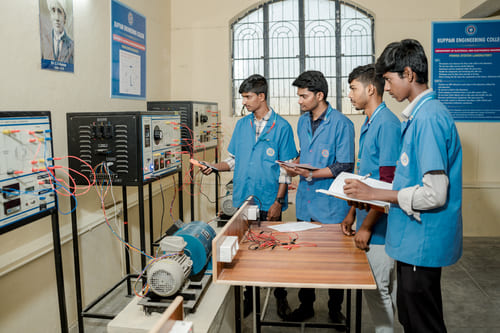
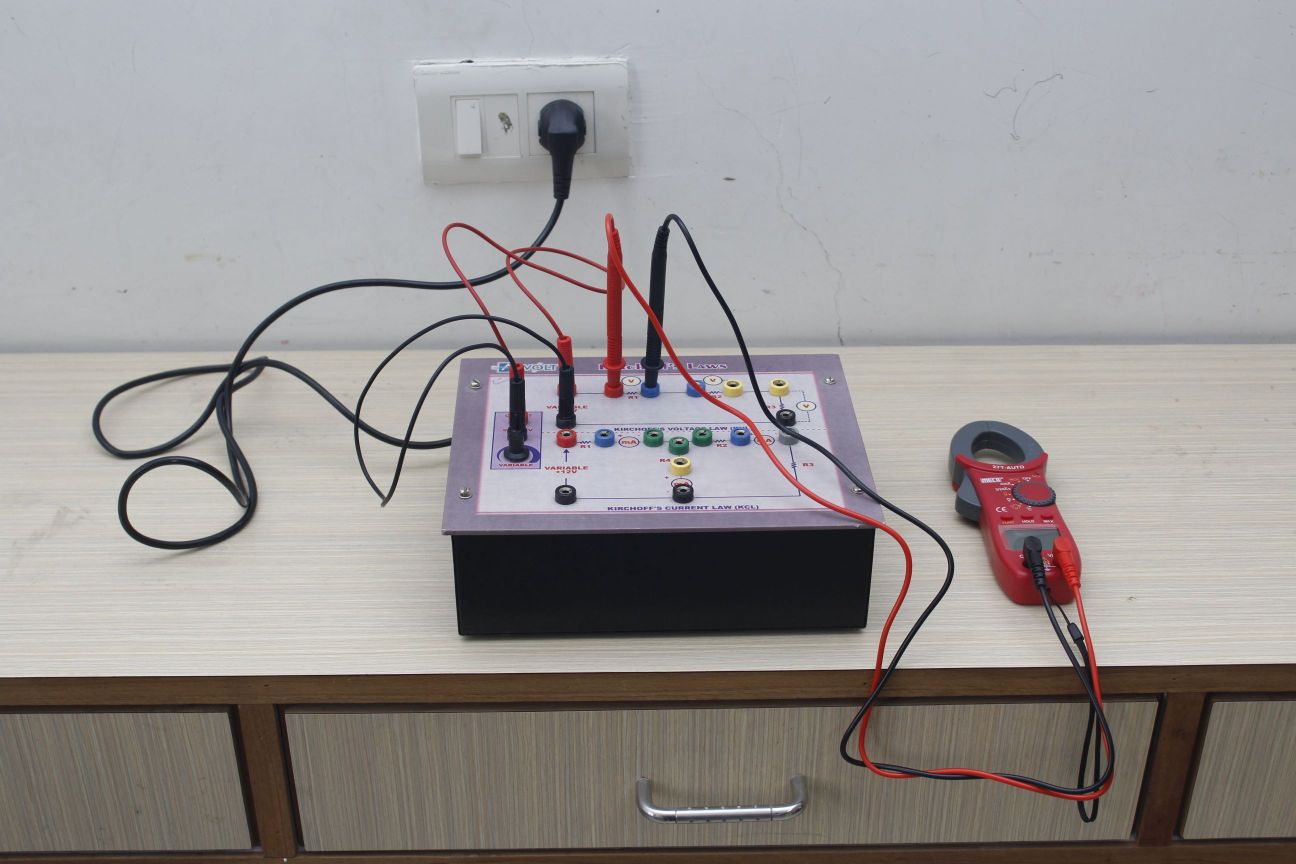
    The Department has dedicated and devoted faculty members and the faculty members are contributing both in teaching and research. The Department has well established laboratories to conduct the experiments for the students in UG and PG level and provided with a research laboratory to carry out the research work by the full time research scholars. The students are motivated to actively participate in Co-curricular and Extra-curricular activities. The students are allowed to participate actively in Department Association activities and other activities in Institute level to develop their leadership skills and team work. The faculty members and students are motivated to attend the events conducting by the reputed institutions for their empowerment and make them aware of current cutting edge technologies in the field of electrical and electronics engineering.

    The students are given hands on training in doing real time hardware projects by considering the real time problems associated with the society after the regular academic working hours. The Department is working with the moto of taking industrial works/ training into campus so that the faculty members and students can develop their skills to cope up with current trends in the field of electrical and electronics engineering.

    The department is continually conducting professional activities such as Workshops, Conferences, Faculty Development Programs (FDPs), Project Expo’s and conducting the brain storming sessions on entrepreneurship for the students to become the technology based entrepreneurs.

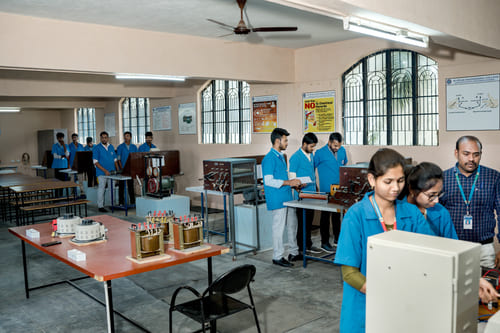
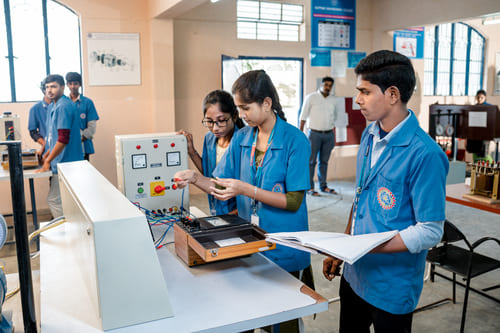
    The laboratories are well equipped with modern training facilities that cater to the requirements of the University syllabus as well as to architect the learning experience. This Department plays a vital role in training students of other branches of engineering too.

    The students are encouraged to deliver seminars, publish papers in both National / International Conferences in latest topics, thus promoting technical and communication skills. Over the years, our students have gone on to occupy key positions in education, science, industry and government administration.

    For analytical courses, problems are solved during the tutorial hours with better clarity. Innovative and modern teaching methodologies are adopted for classroom teaching.

    Besides regular classes and lab sessions, the Electrical and Electronics Association conducts Guest Lectures on emerging technologies regularly thereby ensuring that the students are “Industry Ready”. Students are taken on Industrial visits on regular basis.

    The students of this department have secured almost 90 percent placements in various high profile companies. Our alumni who have gone on to distinguished careers as innovators in industry, living and working throughout the world, still have corporate and personal ties to the College through recruitment, mentoring, guest lectures, and other interactions.

  • Vision & Mission

  • Vision and Mission

    VISION

    To develop students as successful professionals with high moral, ethical and social values in the field of electrical and electronics engineering following global standards.

    MISSION

    • M1: Empowering the students with conventional and cutting edge technologies in the field of electrical and electronics engineering to meet the global challenges.
    • M2: Nurture the research culture and take a lead to develop innovative applications for the betterment of humankind.
    • M3: Impart ethical and moral values among the students in their professional practices.
  • Programs Offered

  • Programs Offered

    Diploma in Electrical and Electronics Engineering – (DEEE)

    Department of Electrical and Electronics Engineering has started the Diploma program in Electrical and Electronics Engineering (DEEE) in the year of 2011 on second shift basis with the sanctioned intake of 60. The program is approved by AICTE and affiliated to State Board of Technical Education and Training (SBTET). The program is started with the moto of providing the technical education to the rural communities and make them employable.  The diploma program covers various courses include Electrical Machines, Electrical Circuit Theory, Electronic Devices and Circuits, Digital Electronics, Measurement and Instrumentation, Power System, Power Electronics, Micro controller, Industrial Management and Industrial Automation. All the courses are handled by the dedicated and well qualified faculty members. The students are encouraged to exhibit their innovations and skills by participating in various curricular and extra-curricular activities. Diploma program run by the KES is creating the strong technical platform for the students in both placement and higher studies.

    B.Tech. : Electrical and Electronics

    The Department is started with B. Tech. – Electrical and Electronics Engineering program on 2002. Currently, the Department following the syllabus framed by the JNTUA (R13 & R15) for the students. The students given provision to attend the various value added skill development programs in the campus and are entertained to carry out the hardware projects after their regular academic hours from their second year of study onwards. The Department aims to develop their students’ skills set with ethical and moral values to cope up with the technical changes/challenges in their profession.

    Program Educational Objectives (PEOs)

    The graduates will

    Program Outcomes (POs)

    Graduates of Electrical and Electronics Engineering program are able to

    Program Specific Outcomes (PSOs):

    The graduates will have

    M.Tech - Power Electronics

    The Department started the M. Tech. – Power Electronics in the year of 2010 with the sanctioned intake of 18. Currently, the Department following the syllabus framed by the JNTUA (R09 & R17).  The program structure provides a right mix of compulsory and elective courses. The students of M. Tech. program are advised to carry out their project work by considering practical challenges/issues in the field of Power Electronics and its applications in allied domains.

    Program Educational Objectives (PEOs)

    The graduates will have

    Program Outcomes (POs)

    The Graduates will be able to: POs are statements that describe what students are expected to know and be able to do upon graduating from the program. These relate to the skills, knowledge, analytical ability attitude and behaviour that students acquire through the program. The POs essentially indicate what the students can do from subject-wise knowledge acquired by them during the program. As such, POs define the professional profile of a graduate of PG Engineering Program. NBA has defined the following three POs for a graduate of PG Engineering Program:
  • Syllabus

  • Faculty Details

  • Faculty Details

    staff profile image
    staff profile image
    staff profile image
    staff profile image
    staff profile image
    staff profile image
    staff profile image
    staff profile image
    staff profile image
    staff profile image
  • Laboratory Details

  • Laboratory Details

    Electrical and Electronics Engineering

    Electrical Machines Lab.

    Control Systems Lab

    Electrical Measurements Lab.

    Power Electronics Lab.

    Networks Lab.

    Electrical Simulation Lab.

    M.Tech (Power Electronics)

    Machine and Power System Lab.

    Simulation Lab.

  • Office

About the Department

About the Department

The Department of Electrical and Electronics Engineering is one of the first few disciplines that were started during the year 2002 with a clear vision of developing students as successful professionals with high moral, ethical and social values in the field of electrical and electronics engineering following global standards. The Department running one U.G. program (B. Tech. – Electrical and Electronics Engineering) and one P.G. program (M. Tech. – Power Electronics). The programs are approved by AICTE and affiliated to JNTUA, Ananthapuramu. The Department is recognized as a research center by JNTUA, Ananthapuramu. Department also running one Diploma program (Diploma in Electrical and Electronics Engineering) in second shift.

The Department has dedicated and devoted faculty members and the faculty members are contributing both in teaching and research. The Department has well established laboratories to conduct the experiments for the students in UG and PG level and provided with a research laboratory to carry out the research work by the full time research scholars. The students are motivated to actively participate in Co-curricular and Extra-curricular activities. The students are allowed to participate actively in Department Association activities and other activities in Institute level to develop their leadership skills and team work. The faculty members and students are motivated to attend the events conducting by the reputed institutions for their empowerment and make them aware of current cutting edge technologies in the field of electrical and electronics engineering.

The students are given hands on training in doing real time hardware projects by considering the real time problems associated with the society after the regular academic working hours. The Department is working with the moto of taking industrial works/ training into campus so that the faculty members and students can develop their skills to cope up with current trends in the field of electrical and electronics engineering.

The department is continually conducting professional activities such as Workshops, Conferences, Faculty Development Programs (FDPs), Project Expo’s and conducting the brain storming sessions on entrepreneurship for the students to become the technology based entrepreneurs.

The laboratories are well equipped with modern training facilities that cater to the requirements of the University syllabus as well as to architect the learning experience. This Department plays a vital role in training students of other branches of engineering too.

The students are encouraged to deliver seminars, publish papers in both National / International Conferences in latest topics, thus promoting technical and communication skills. Over the years, our students have gone on to occupy key positions in education, science, industry and government administration.

For analytical courses, problems are solved during the tutorial hours with better clarity. Innovative and modern teaching methodologies are adopted for classroom teaching.

Besides regular classes and lab sessions, the Electrical and Electronics Association conducts Guest Lectures on emerging technologies regularly thereby ensuring that the students are “Industry Ready”. Students are taken on Industrial visits on regular basis.

The students of this department have secured almost 90 percent placements in various high profile companies. Our alumni who have gone on to distinguished careers as innovators in industry, living and working throughout the world, still have corporate and personal ties to the College through recruitment, mentoring, guest lectures, and other interactions.

Vision and Mission

VISION

To develop students as successful professionals with high moral, ethical and social values in the field of electrical and electronics engineering following global standards.

MISSION

  • M1: Empowering the students with conventional and cutting edge technologies in the field of electrical and electronics engineering to meet the global challenges.
  • M2: Nurture the research culture and take a lead to develop innovative applications for the betterment of humankind.
  • M3: Impart ethical and moral values among the students in their professional practices.

Programs Offered

Diploma in Electrical and Electronics Engineering – (DEEE)

Department of Electrical and Electronics Engineering has started the Diploma program in Electrical and Electronics Engineering (DEEE) in the year of 2011 on second shift basis with the sanctioned intake of 60. The program is approved by AICTE and affiliated to State Board of Technical Education and Training (SBTET). The program is started with the moto of providing the technical education to the rural communities and make them employable.  The diploma program covers various courses include Electrical Machines, Electrical Circuit Theory, Electronic Devices and Circuits, Digital Electronics, Measurement and Instrumentation, Power System, Power Electronics, Micro controller, Industrial Management and Industrial Automation. All the courses are handled by the dedicated and well qualified faculty members. The students are encouraged to exhibit their innovations and skills by participating in various curricular and extra-curricular activities. Diploma program run by the KES is creating the strong technical platform for the students in both placement and higher studies.

B.Tech. : Electrical and Electronics

The Department is started with B. Tech. – Electrical and Electronics Engineering program on 2002. Currently, the Department following the syllabus framed by the JNTUA (R13 & R15) for the students. The students given provision to attend the various value added skill development programs in the campus and are entertained to carry out the hardware projects after their regular academic hours from their second year of study onwards. The Department aims to develop their students’ skills set with ethical and moral values to cope up with the technical changes/challenges in their profession.

Program Educational Objectives (PEOs)

The graduates will

Program Outcomes (POs)

Graduates of Electrical and Electronics Engineering program are able to

Program Specific Outcomes (PSOs):

The graduates will have

M.Tech - Power Electronics

The Department started the M. Tech. – Power Electronics in the year of 2010 with the sanctioned intake of 18. Currently, the Department following the syllabus framed by the JNTUA (R09 & R17).  The program structure provides a right mix of compulsory and elective courses. The students of M. Tech. program are advised to carry out their project work by considering practical challenges/issues in the field of Power Electronics and its applications in allied domains.

Program Educational Objectives (PEOs)

The graduates will have

Program Outcomes (POs)

The Graduates will be able to: POs are statements that describe what students are expected to know and be able to do upon graduating from the program. These relate to the skills, knowledge, analytical ability attitude and behaviour that students acquire through the program. The POs essentially indicate what the students can do from subject-wise knowledge acquired by them during the program. As such, POs define the professional profile of a graduate of PG Engineering Program. NBA has defined the following three POs for a graduate of PG Engineering Program:

Faculty Details

staff profile image
staff profile image
staff profile image
staff profile image
staff profile image
staff profile image
staff profile image
staff profile image
staff profile image
staff profile image

Laboratory Details

Electrical and Electronics Engineering

Electrical Machines Lab.

Control Systems Lab

Electrical Measurements Lab.

Power Electronics Lab.

Networks Lab.

Electrical Simulation Lab.

M.Tech (Power Electronics)

Machine and Power System Lab.

Simulation Lab.

  • About Department
  • About the Department

    About the Department

    The Department of Electrical and Electronics Engineering is one of the first few disciplines that were started during the year 2002 with a clear vision of developing students as successful professionals with high moral, ethical and social values in the field of electrical and electronics engineering following global standards. The Department running one U.G. program (B. Tech. – Electrical and Electronics Engineering) and one P.G. program (M. Tech. – Power Electronics). The programs are approved by AICTE and affiliated to JNTUA, Ananthapuramu. The Department is recognized as a research center by JNTUA, Ananthapuramu. Department also running one Diploma program (Diploma in Electrical and Electronics Engineering) in second shift.

    The Department has dedicated and devoted faculty members and the faculty members are contributing both in teaching and research. The Department has well established laboratories to conduct the experiments for the students in UG and PG level and provided with a research laboratory to carry out the research work by the full time research scholars. The students are motivated to actively participate in Co-curricular and Extra-curricular activities. The students are allowed to participate actively in Department Association activities and other activities in Institute level to develop their leadership skills and team work. The faculty members and students are motivated to attend the events conducting by the reputed institutions for their empowerment and make them aware of current cutting edge technologies in the field of electrical and electronics engineering.

    The students are given hands on training in doing real time hardware projects by considering the real time problems associated with the society after the regular academic working hours. The Department is working with the moto of taking industrial works/ training into campus so that the faculty members and students can develop their skills to cope up with current trends in the field of electrical and electronics engineering.

    The department is continually conducting professional activities such as Workshops, Conferences, Faculty Development Programs (FDPs), Project Expo’s and conducting the brain storming sessions on entrepreneurship for the students to become the technology based entrepreneurs.

    The laboratories are well equipped with modern training facilities that cater to the requirements of the University syllabus as well as to architect the learning experience. This Department plays a vital role in training students of other branches of engineering too.

    The students are encouraged to deliver seminars, publish papers in both National / International Conferences in latest topics, thus promoting technical and communication skills. Over the years, our students have gone on to occupy key positions in education, science, industry and government administration.

    For analytical courses, problems are solved during the tutorial hours with better clarity. Innovative and modern teaching methodologies are adopted for classroom teaching.

    Besides regular classes and lab sessions, the Electrical and Electronics Association conducts Guest Lectures on emerging technologies regularly thereby ensuring that the students are “Industry Ready”. Students are taken on Industrial visits on regular basis.

    The students of this department have secured almost 90 percent placements in various high profile companies. Our alumni who have gone on to distinguished careers as innovators in industry, living and working throughout the world, still have corporate and personal ties to the College through recruitment, mentoring, guest lectures, and other interactions.

  • Vision & Mission
  • Vision and Mission

    VISION

    • To develop students as successful professionals with high moral, ethical and social values in the field of electrical and electronics engineering following global standards.

    MISSION

    • M1: Empowering the students with conventional and cutting edge technologies in the field of electrical and electronics engineering to meet the global challenges.
    • M2: Nurture the research culture and take a lead to develop innovative applications for the betterment of humankind.
    • M3: Impart ethical and moral values among the students in their professional practices.
  • Programs Offered
  • Programs Offered

    Diploma in Electrical and Electronics Engineering – (DEEE)

    Department of Electrical and Electronics Engineering has started the Diploma program in Electrical and Electronics Engineering (DEEE) in the year of 2011 on second shift basis with the sanctioned intake of 60. The program is approved by AICTE and affiliated to State Board of Technical Education and Training (SBTET). The program is started with the moto of providing the technical education to the rural communities and make them employable.  The diploma program covers various courses include Electrical Machines, Electrical Circuit Theory, Electronic Devices and Circuits, Digital Electronics, Measurement and Instrumentation, Power System, Power Electronics, Micro controller, Industrial Management and Industrial Automation. All the courses are handled by the dedicated and well qualified faculty members. The students are encouraged to exhibit their innovations and skills by participating in various curricular and extra-curricular activities. Diploma program run by the KES is creating the strong technical platform for the students in both placement and higher studies.

    B.Tech. : Electrical and Electronics

    The Department is started with B. Tech. – Electrical and Electronics Engineering program on 2002. Currently, the Department following the syllabus framed by the JNTUA (R13 & R15) for the students. The students given provision to attend the various value added skill development programs in the campus and are entertained to carry out the hardware projects after their regular academic hours from their second year of study onwards. The Department aims to develop their students’ skills set with ethical and moral values to cope up with the technical changes/challenges in their profession.

    Program Educational Objectives (PEOs)

    The graduates will

    Program Outcomes (POs)

    Graduates of Electrical and Electronics Engineering program are able to

    Program Specific Outcomes (PSOs):

    The graduates will have

    M.Tech - Power Electronics

    The Department started the M. Tech. – Power Electronics in the year of 2010 with the sanctioned intake of 18. Currently, the Department following the syllabus framed by the JNTUA (R09 & R17).  The program structure provides a right mix of compulsory and elective courses. The students of M. Tech. program are advised to carry out their project work by considering practical challenges/issues in the field of Power Electronics and its applications in allied domains.

    Program Educational Objectives (PEOs)

    The graduates will have

    Program Outcomes (POs)

    The Graduates will be able to: POs are statements that describe what students are expected to know and be able to do upon graduating from the program. These relate to the skills, knowledge, analytical ability attitude and behaviour that students acquire through the program. The POs essentially indicate what the students can do from subject-wise knowledge acquired by them during the program. As such, POs define the professional profile of a graduate of PG Engineering Program. NBA has defined the following three POs for a graduate of PG Engineering Program:
  • Syllabus
  • Faculty Details
  • Faculty Details

    staff profile image
    staff profile image
    staff profile image
    staff profile image
    staff profile image
    staff profile image
    staff profile image
    staff profile image
    staff profile image
    staff profile image
  • Laboratory Details
  • Laboratory Details

    Electrical and Electronics Engineering

    Electrical Machines Lab.

    Control Systems Lab

    Electrical Measurements Lab.

    Power Electronics Lab.

    Networks Lab.

    Electrical Simulation Lab.

    M.Tech (Power Electronics)

    Machine and Power System Lab.

    Simulation Lab.

  • Office

About the Department

About the Department

The Department of Electrical and Electronics Engineering is one of the first few disciplines that were started during the year 2002 with a clear vision of developing students as successful professionals with high moral, ethical and social values in the field of electrical and electronics engineering following global standards. The Department running one U.G. program (B. Tech. – Electrical and Electronics Engineering) and one P.G. program (M. Tech. – Power Electronics). The programs are approved by AICTE and affiliated to JNTUA, Ananthapuramu. The Department is recognized as a research center by JNTUA, Ananthapuramu. Department also running one Diploma program (Diploma in Electrical and Electronics Engineering) in second shift.

The Department has dedicated and devoted faculty members and the faculty members are contributing both in teaching and research. The Department has well established laboratories to conduct the experiments for the students in UG and PG level and provided with a research laboratory to carry out the research work by the full time research scholars. The students are motivated to actively participate in Co-curricular and Extra-curricular activities. The students are allowed to participate actively in Department Association activities and other activities in Institute level to develop their leadership skills and team work. The faculty members and students are motivated to attend the events conducting by the reputed institutions for their empowerment and make them aware of current cutting edge technologies in the field of electrical and electronics engineering.

The students are given hands on training in doing real time hardware projects by considering the real time problems associated with the society after the regular academic working hours. The Department is working with the moto of taking industrial works/ training into campus so that the faculty members and students can develop their skills to cope up with current trends in the field of electrical and electronics engineering.

The department is continually conducting professional activities such as Workshops, Conferences, Faculty Development Programs (FDPs), Project Expo’s and conducting the brain storming sessions on entrepreneurship for the students to become the technology based entrepreneurs.

The laboratories are well equipped with modern training facilities that cater to the requirements of the University syllabus as well as to architect the learning experience. This Department plays a vital role in training students of other branches of engineering too.

The students are encouraged to deliver seminars, publish papers in both National / International Conferences in latest topics, thus promoting technical and communication skills. Over the years, our students have gone on to occupy key positions in education, science, industry and government administration.

For analytical courses, problems are solved during the tutorial hours with better clarity. Innovative and modern teaching methodologies are adopted for classroom teaching.

Besides regular classes and lab sessions, the Electrical and Electronics Association conducts Guest Lectures on emerging technologies regularly thereby ensuring that the students are “Industry Ready”. Students are taken on Industrial visits on regular basis.

The students of this department have secured almost 90 percent placements in various high profile companies. Our alumni who have gone on to distinguished careers as innovators in industry, living and working throughout the world, still have corporate and personal ties to the College through recruitment, mentoring, guest lectures, and other interactions.

Vision and Mission

VISION

  • To develop students as successful professionals with high moral, ethical and social values in the field of electrical and electronics engineering following global standards.

MISSION

  • M1: Empowering the students with conventional and cutting edge technologies in the field of electrical and electronics engineering to meet the global challenges.
  • M2: Nurture the research culture and take a lead to develop innovative applications for the betterment of humankind.
  • M3: Impart ethical and moral values among the students in their professional practices.

Programs Offered

Diploma in Electrical and Electronics Engineering – (DEEE)

Department of Electrical and Electronics Engineering has started the Diploma program in Electrical and Electronics Engineering (DEEE) in the year of 2011 on second shift basis with the sanctioned intake of 60. The program is approved by AICTE and affiliated to State Board of Technical Education and Training (SBTET). The program is started with the moto of providing the technical education to the rural communities and make them employable.  The diploma program covers various courses include Electrical Machines, Electrical Circuit Theory, Electronic Devices and Circuits, Digital Electronics, Measurement and Instrumentation, Power System, Power Electronics, Micro controller, Industrial Management and Industrial Automation. All the courses are handled by the dedicated and well qualified faculty members. The students are encouraged to exhibit their innovations and skills by participating in various curricular and extra-curricular activities. Diploma program run by the KES is creating the strong technical platform for the students in both placement and higher studies.

B.Tech. : Electrical and Electronics

The Department is started with B. Tech. – Electrical and Electronics Engineering program on 2002. Currently, the Department following the syllabus framed by the JNTUA (R13 & R15) for the students. The students given provision to attend the various value added skill development programs in the campus and are entertained to carry out the hardware projects after their regular academic hours from their second year of study onwards. The Department aims to develop their students’ skills set with ethical and moral values to cope up with the technical changes/challenges in their profession.

Program Educational Objectives (PEOs)

The graduates will

Program Outcomes (POs)

Graduates of Electrical and Electronics Engineering program are able to

Program Specific Outcomes (PSOs):

The graduates will have

M.Tech - Power Electronics

The Department started the M. Tech. – Power Electronics in the year of 2010 with the sanctioned intake of 18. Currently, the Department following the syllabus framed by the JNTUA (R09 & R17).  The program structure provides a right mix of compulsory and elective courses. The students of M. Tech. program are advised to carry out their project work by considering practical challenges/issues in the field of Power Electronics and its applications in allied domains.

Program Educational Objectives (PEOs)

The graduates will have

Program Outcomes (POs)

The Graduates will be able to: POs are statements that describe what students are expected to know and be able to do upon graduating from the program. These relate to the skills, knowledge, analytical ability attitude and behaviour that students acquire through the program. The POs essentially indicate what the students can do from subject-wise knowledge acquired by them during the program. As such, POs define the professional profile of a graduate of PG Engineering Program. NBA has defined the following three POs for a graduate of PG Engineering Program:

Faculty Details

staff profile image
staff profile image
staff profile image
staff profile image
staff profile image
staff profile image
staff profile image
staff profile image
staff profile image
staff profile image

Laboratory Details

Electrical and Electronics Engineering

Electrical Machines Lab.

Control Systems Lab

Electrical Measurements Lab.

Power Electronics Lab.

Networks Lab.

Electrical Simulation Lab.

M.Tech (Power Electronics)

Machine and Power System Lab.

Simulation Lab.