



DATA SCIENCE
Achievements
Industry Collaboration
Research
Laboratory
-
About Department
-
About the DepartmentThe department was established in the year 2023 with an intake of 60 in Bachelor Programme. Now, it administers Bachelor’s programme in Computer Science and Engineering (Data Science) with an intake of 60. The department is approved by AICTE, New Delhi and affiliated to JNTUA, Ananthapuramu. The primary goal of CSE (Data Science) is to provide best IT infrastructure, good teaching & learning environment, adopt industry practices through industry collaborations and inculcate moral and ethical values.
Data Science is a new branch of study that deals with scientific methodologies, processes, and techniques drawn from different domains like statistics, cognitive science, and computing and information science to extract knowledge from structured data and unstructured data. This knowledge is applied in making various intelligent decisions in business applications. It is a specialised branch that deals with the development of data-driven solutions, data visualization tools and techniques to analyse big data. It also incorporates the concepts of machine learning and deep learning model building for solving various computational and real-world problems.
In KEC, one of the best B.Tech data science colleges in Kuppam, you will learn how to design, create and implement AI and DS based software solutions to solve actual business problems. This course helps to explore concepts such as AI, Data Analytics, Data visualization, Machine Learning, Deep Learning, semantic web and social network analytics, Blockchain Technologies, and Data Security and Privacy.
DS graduates will be able to design, and develop intelligent business applications to solve various industrial problems. They use the latest tools and open source technologies to recommend the required solutions. They can figure out how to evaluate the ethical, legitimate, proficient and social standards of engineering knowledge and practices. These graduates can also exhibit their domain knowledge in data handling, knowledge extraction, mobile and distributed application development, intelligence web/ecommerce development, database administration, computer hardware, networking, education and training and decision support systems using AI and Data Science tools and techniques. -
Vision & Mission
-
Vision and Mission

VISION
Strive for excellence in Computer Science and Engineering (Data Science) producing competent
professionals with ethical values and social responsibility.
MISSION
The students will be able to achieve quality education by providing competent faculty members,
Innovative teaching – learning process, Computing facilities and Skill Development Training in the
field of Computer Science.M1: Attaining academic excellence through competent faculty, innovative teaching-learning process
and creating Centre of excellence in leading areas of Computer Science.
M2: To create ambiance for effective learning and skill development by promoting research culture
with industry institute interaction.
M3: To inculcate professionalism adherence to ethical and social values. -
Programs Offered
-
Programs Offered
B.Tech. – CSE(Data Science)
Program Educational Objectives (PEOs)
The Program Educational Objectives of the department of Computer Science and Engineering(Data
Science) are such that when the students graduate, they will be able to:- PEO-1 Become successful professional with ethical and social values.
- PEO-2 Pursue higher education in reputed institutions
- PEO-3 Become successful entrepreneur to serve the society with ethical and social values.
Program Outcomes (POs)
Engineering Graduates of CSE department of KEC will be able to:
- PO1: Engineering knowledge: Apply the knowledge of mathematics, science, engineering fundamentals, and an engineering specialization to the solution of complex engineering problems.
- PO2: Problem analysis: Identify, formulate, review research literature, and analyze complex engineering problems reaching substantiated conclusions using first principles of mathematics, natural sciences, and engineering sciences.
- PO3:Design/development of solutions: Design solutions for complex engineering problems and design system components or processes that meet the specified needs with appropriate consideration for the public health and safety, and the cultural, societal, and environmental considerations.
- PO4: Conduct investigations of complex problems: Use research-based knowledge and research methods including design of experiments, analysis and interpretation of data, and synthesis of the information to provide valid conclusions.
- PO5: Modern tool usage: Create, select, and apply appropriate techniques, resources, and modern engineering and IT tools including prediction and modeling to complex engineering activities with an understanding of the limitations.
- PO6: The engineer and society: Apply reasoning informed by the contextual knowledge to assess societal, health, safety, legal and cultural issues and the consequent responsibilities relevant to the professional engineering practice.
- PO7: Environment and sustainability: Understand the impact of the professional engineering solutions in societal and environmental contexts, and demonstrate the knowledge of, and need for sustainable development.
- PO8: Ethics: Apply ethical principles and commit to professional ethics and responsibilities and norms of the engineering practice.
- PO9: Individual and team work: Function effectively as an individual, and as a member or leader in diverse teams, and in multidisciplinary settings.
- PO10: Communication: Communicate effectively on complex engineering activities with the engineering community and with society at large, such as, being able to comprehend and write effective reports and design documentation, make effective presentations, and give and receive clear instructions.
- PO11: Project management and finance: Demonstrate knowledge and understanding of the engineering and management principles and apply these to one’s own work, as a member and leader in a team, to manage projects and in multidisciplinary environments.
- PO12: Life-long learning: Recognize the need for, and have the preparation and ability to engage in independent and life-long learning in the broadest context of technological change.
Program Specific Outcomes (PSOs):
- PSO1 Ability to design, analysis and develop computer program in the area related to web design, multimedia, algorithms and networking.
- PSO2: An ability to apply standard practices and strategies in software project development using open-sources.
-
Syllabus
-
-
Faculty Details
-
Faculty Details
-
Laboratory Details
-
Laboratory Details
CSE (Data Science)
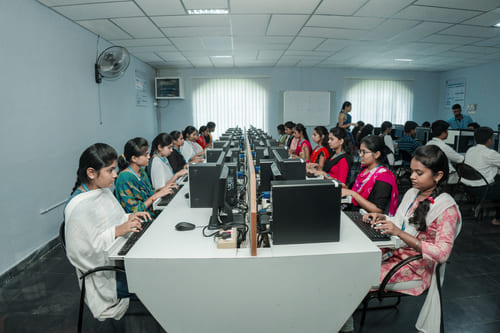
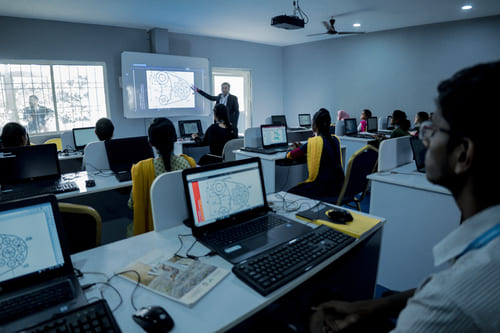
Data Science Lab

Java Programming lab

Python Lab

Database Management Systems Lab

Data Engineering Lab
-
Office
-
For any correspondence to the Department, Please write to:
About
the
Department
Data Science is a new branch of study that deals with scientific methodologies, processes, and techniques drawn from different domains like statistics, cognitive science, and computing and information science to extract knowledge from structured data and unstructured data. This knowledge is applied in making various intelligent decisions in business applications. It is a specialised branch that deals with the development of data-driven solutions, data visualization tools and techniques to analyse big data. It also incorporates the concepts of machine learning and deep learning model building for solving various computational and real-world problems.
In KEC, one of the best B.Tech data science colleges in Kuppam, you will learn how to design, create and implement AI and DS based software solutions to solve actual business problems. This course helps to explore concepts such as AI, Data Analytics, Data visualization, Machine Learning, Deep Learning, semantic web and social network analytics, Blockchain Technologies, and Data Security and Privacy.
DS graduates will be able to design, and develop intelligent business applications to solve various industrial problems. They use the latest tools and open source technologies to recommend the required solutions. They can figure out how to evaluate the ethical, legitimate, proficient and social standards of engineering knowledge and practices. These graduates can also exhibit their domain knowledge in data handling, knowledge extraction, mobile and distributed application development, intelligence web/ecommerce development, database administration, computer hardware, networking, education and training and decision support systems using AI and Data Science tools and techniques.
Vision and Mission
VISION
Strive for excellence in Computer Science and Engineering (Data Science) producing competent
professionals with ethical values and social responsibility.
MISSION
The students will be able to achieve quality education by providing competent faculty members,
Innovative teaching – learning process, Computing facilities and Skill Development Training in the
field of Computer Science.
M1: Attaining academic excellence through competent faculty, innovative teaching-learning process
and creating Centre of excellence in leading areas of Computer Science.
M2: To create ambiance for effective learning and skill development by promoting research culture
with industry institute interaction.
M3: To inculcate professionalism adherence to ethical and social values.
Programs Offered
B.Tech. – CSE(Data Science)
Program Educational Objectives (PEOs)
The Program Educational Objectives of the department of Computer Science and Engineering(Data
Science) are such that when the students graduate, they will be able to:
- PEO-1 Become successful professional with ethical and social values.
- PEO-2 Pursue higher education in reputed institutions
- PEO-3 Become successful entrepreneur to serve the society with ethical and social values.
Program Outcomes (POs)
Engineering Graduates of CSE department of KEC will be able to:
- PO1: Engineering knowledge: Apply the knowledge of mathematics, science, engineering fundamentals, and an engineering specialization to the solution of complex engineering problems.
- PO2: Problem analysis: Identify, formulate, review research literature, and analyze complex engineering problems reaching substantiated conclusions using first principles of mathematics, natural sciences, and engineering sciences.
- PO3:Design/development of solutions: Design solutions for complex engineering problems and design system components or processes that meet the specified needs with appropriate consideration for the public health and safety, and the cultural, societal, and environmental considerations.
- PO4: Conduct investigations of complex problems: Use research-based knowledge and research methods including design of experiments, analysis and interpretation of data, and synthesis of the information to provide valid conclusions.
- PO5: Modern tool usage: Create, select, and apply appropriate techniques, resources, and modern engineering and IT tools including prediction and modeling to complex engineering activities with an understanding of the limitations.
- PO6: The engineer and society: Apply reasoning informed by the contextual knowledge to assess societal, health, safety, legal and cultural issues and the consequent responsibilities relevant to the professional engineering practice.
- PO7: Environment and sustainability: Understand the impact of the professional engineering solutions in societal and environmental contexts, and demonstrate the knowledge of, and need for sustainable development.
- PO8: Ethics: Apply ethical principles and commit to professional ethics and responsibilities and norms of the engineering practice.
- PO9: Individual and team work: Function effectively as an individual, and as a member or leader in diverse teams, and in multidisciplinary settings.
- PO10: Communication: Communicate effectively on complex engineering activities with the engineering community and with society at large, such as, being able to comprehend and write effective reports and design documentation, make effective presentations, and give and receive clear instructions.
- PO11: Project management and finance: Demonstrate knowledge and understanding of the engineering and management principles and apply these to one’s own work, as a member and leader in a team, to manage projects and in multidisciplinary environments.
- PO12: Life-long learning: Recognize the need for, and have the preparation and ability to engage in independent and life-long learning in the broadest context of technological change.
Program Specific Outcomes (PSOs):
- PSO1 Ability to design, analysis and develop computer program in the area related to web design, multimedia, algorithms and networking.
- PSO2: An ability to apply standard practices and strategies in software project development using open-sources.
Faculty Details
Laboratory Details
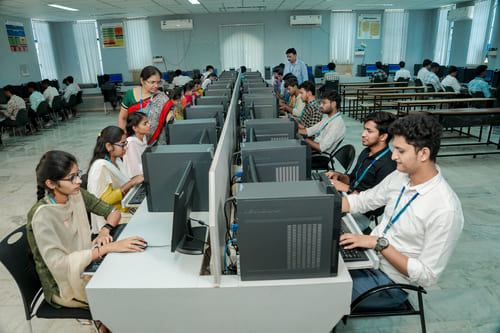
CSE
(Data Science)

Data Science Lab

Java Programming lab

Python Lab

Database Management Systems Lab

Data Engineering Lab
For any correspondence to the Department, Please write to:
- About Department
-
About the DepartmentThe department was established in the year 2023 with an intake of 60 in Bachelor Programme. Now, it administers Bachelor’s programme in Computer Science and Engineering (Data Science) with an intake of 60. The department is approved by AICTE, New Delhi and affiliated to JNTUA, Ananthapuramu. The primary goal of CSE (Data Science) is to provide best IT infrastructure, good teaching & learning environment, adopt industry practices through industry collaborations and inculcate moral and ethical values.
Data Science is a new branch of study that deals with scientific methodologies, processes, and techniques drawn from different domains like statistics, cognitive science, and computing and information science to extract knowledge from structured data and unstructured data. This knowledge is applied in making various intelligent decisions in business applications. It is a specialised branch that deals with the development of data-driven solutions, data visualization tools and techniques to analyse big data. It also incorporates the concepts of machine learning and deep learning model building for solving various computational and real-world problems.
In KEC, one of the best B.Tech data science colleges in Kuppam, you will learn how to design, create and implement AI and DS based software solutions to solve actual business problems. This course helps to explore concepts such as AI, Data Analytics, Data visualization, Machine Learning, Deep Learning, semantic web and social network analytics, Blockchain Technologies, and Data Security and Privacy.
DS graduates will be able to design, and develop intelligent business applications to solve various industrial problems. They use the latest tools and open source technologies to recommend the required solutions. They can figure out how to evaluate the ethical, legitimate, proficient and social standards of engineering knowledge and practices. These graduates can also exhibit their domain knowledge in data handling, knowledge extraction, mobile and distributed application development, intelligence web/ecommerce development, database administration, computer hardware, networking, education and training and decision support systems using AI and Data Science tools and techniques. - Vision & Mission
-
Vision and Mission

VISION
Strive for excellence in Computer Science and Engineering (Data Science) producing competent
professionals with ethical values and social responsibility.
MISSION
The students will be able to achieve quality education by providing competent faculty members,
Innovative teaching – learning process, Computing facilities and Skill Development Training in the
field of Computer Science.M1: Attaining academic excellence through competent faculty, innovative teaching-learning process
and creating Centre of excellence in leading areas of Computer Science.
M2: To create ambiance for effective learning and skill development by promoting research culture
with industry institute interaction.
M3: To inculcate professionalism adherence to ethical and social values. - Programs Offered
-
Programs Offered
B.Tech. – CSE(Data Science)
Program Educational Objectives (PEOs)
The Program Educational Objectives of the department of Computer Science and Engineering(Data
Science) are such that when the students graduate, they will be able to:- PEO-1 Become successful professional with ethical and social values.
- PEO-2 Pursue higher education in reputed institutions
- PEO-3 Become successful entrepreneur to serve the society with ethical and social values.
Program Outcomes (POs)
Engineering Graduates of CSE department of KEC will be able to:
- PO1: Engineering knowledge: Apply the knowledge of mathematics, science, engineering fundamentals, and an engineering specialization to the solution of complex engineering problems.
- PO2: Problem analysis: Identify, formulate, review research literature, and analyze complex engineering problems reaching substantiated conclusions using first principles of mathematics, natural sciences, and engineering sciences.
- PO3:Design/development of solutions: Design solutions for complex engineering problems and design system components or processes that meet the specified needs with appropriate consideration for the public health and safety, and the cultural, societal, and environmental considerations.
- PO4: Conduct investigations of complex problems: Use research-based knowledge and research methods including design of experiments, analysis and interpretation of data, and synthesis of the information to provide valid conclusions.
- PO5: Modern tool usage: Create, select, and apply appropriate techniques, resources, and modern engineering and IT tools including prediction and modeling to complex engineering activities with an understanding of the limitations.
- PO6: The engineer and society: Apply reasoning informed by the contextual knowledge to assess societal, health, safety, legal and cultural issues and the consequent responsibilities relevant to the professional engineering practice.
- PO7: Environment and sustainability: Understand the impact of the professional engineering solutions in societal and environmental contexts, and demonstrate the knowledge of, and need for sustainable development.
- PO8: Ethics: Apply ethical principles and commit to professional ethics and responsibilities and norms of the engineering practice.
- PO9: Individual and team work: Function effectively as an individual, and as a member or leader in diverse teams, and in multidisciplinary settings.
- PO10: Communication: Communicate effectively on complex engineering activities with the engineering community and with society at large, such as, being able to comprehend and write effective reports and design documentation, make effective presentations, and give and receive clear instructions.
- PO11: Project management and finance: Demonstrate knowledge and understanding of the engineering and management principles and apply these to one’s own work, as a member and leader in a team, to manage projects and in multidisciplinary environments.
- PO12: Life-long learning: Recognize the need for, and have the preparation and ability to engage in independent and life-long learning in the broadest context of technological change.
Program Specific Outcomes (PSOs):
- PSO1 Ability to design, analysis and develop computer program in the area related to web design, multimedia, algorithms and networking.
- PSO2: An ability to apply standard practices and strategies in software project development using open-sources.
- Syllabus
-
- Faculty Details
-
Faculty Details
- Laboratory Details
-
Laboratory Details
CSE (Data Science)
Data Science Lab

Java Programming lab

Python Lab

Database Management Systems Lab

Data Engineering Lab
- Office
-
For any correspondence to the Department, Please write to:
About
the
Department
Data Science is a new branch of study that deals with scientific methodologies, processes, and techniques drawn from different domains like statistics, cognitive science, and computing and information science to extract knowledge from structured data and unstructured data. This knowledge is applied in making various intelligent decisions in business applications. It is a specialised branch that deals with the development of data-driven solutions, data visualization tools and techniques to analyse big data. It also incorporates the concepts of machine learning and deep learning model building for solving various computational and real-world problems.
In KEC, one of the best B.Tech data science colleges in Kuppam, you will learn how to design, create and implement AI and DS based software solutions to solve actual business problems. This course helps to explore concepts such as AI, Data Analytics, Data visualization, Machine Learning, Deep Learning, semantic web and social network analytics, Blockchain Technologies, and Data Security and Privacy.
DS graduates will be able to design, and develop intelligent business applications to solve various industrial problems. They use the latest tools and open source technologies to recommend the required solutions. They can figure out how to evaluate the ethical, legitimate, proficient and social standards of engineering knowledge and practices. These graduates can also exhibit their domain knowledge in data handling, knowledge extraction, mobile and distributed application development, intelligence web/ecommerce development, database administration, computer hardware, networking, education and training and decision support systems using AI and Data Science tools and techniques.
Vision and Mission
VISION
Strive for excellence in Computer Science and Engineering (Data Science) producing competent
professionals with ethical values and social responsibility.
MISSION
The students will be able to achieve quality education by providing competent faculty members,
Innovative teaching – learning process, Computing facilities and Skill Development Training in the
field of Computer Science.
M1: Attaining academic excellence through competent faculty, innovative teaching-learning process
and creating Centre of excellence in leading areas of Computer Science.
M2: To create ambiance for effective learning and skill development by promoting research culture
with industry institute interaction.
M3: To inculcate professionalism adherence to ethical and social values.
Programs Offered
B.Tech. – CSE(Data Science)
Program Educational Objectives (PEOs)
The Program Educational Objectives of the department of Computer Science and Engineering(Data
Science) are such that when the students graduate, they will be able to:
- PEO-1 Become successful professional with ethical and social values.
- PEO-2 Pursue higher education in reputed institutions
- PEO-3 Become successful entrepreneur to serve the society with ethical and social values.
Program Outcomes (POs)
Engineering Graduates of CSE department of KEC will be able to:
- PO1: Engineering knowledge: Apply the knowledge of mathematics, science, engineering fundamentals, and an engineering specialization to the solution of complex engineering problems.
- PO2: Problem analysis: Identify, formulate, review research literature, and analyze complex engineering problems reaching substantiated conclusions using first principles of mathematics, natural sciences, and engineering sciences.
- PO3:Design/development of solutions: Design solutions for complex engineering problems and design system components or processes that meet the specified needs with appropriate consideration for the public health and safety, and the cultural, societal, and environmental considerations.
- PO4: Conduct investigations of complex problems: Use research-based knowledge and research methods including design of experiments, analysis and interpretation of data, and synthesis of the information to provide valid conclusions.
- PO5: Modern tool usage: Create, select, and apply appropriate techniques, resources, and modern engineering and IT tools including prediction and modeling to complex engineering activities with an understanding of the limitations.
- PO6: The engineer and society: Apply reasoning informed by the contextual knowledge to assess societal, health, safety, legal and cultural issues and the consequent responsibilities relevant to the professional engineering practice.
- PO7: Environment and sustainability: Understand the impact of the professional engineering solutions in societal and environmental contexts, and demonstrate the knowledge of, and need for sustainable development.
- PO8: Ethics: Apply ethical principles and commit to professional ethics and responsibilities and norms of the engineering practice.
- PO9: Individual and team work: Function effectively as an individual, and as a member or leader in diverse teams, and in multidisciplinary settings.
- PO10: Communication: Communicate effectively on complex engineering activities with the engineering community and with society at large, such as, being able to comprehend and write effective reports and design documentation, make effective presentations, and give and receive clear instructions.
- PO11: Project management and finance: Demonstrate knowledge and understanding of the engineering and management principles and apply these to one’s own work, as a member and leader in a team, to manage projects and in multidisciplinary environments.
- PO12: Life-long learning: Recognize the need for, and have the preparation and ability to engage in independent and life-long learning in the broadest context of technological change.
Program Specific Outcomes (PSOs):
- PSO1 Ability to design, analysis and develop computer program in the area related to web design, multimedia, algorithms and networking.
- PSO2: An ability to apply standard practices and strategies in software project development using open-sources.
Faculty Details
Laboratory Details
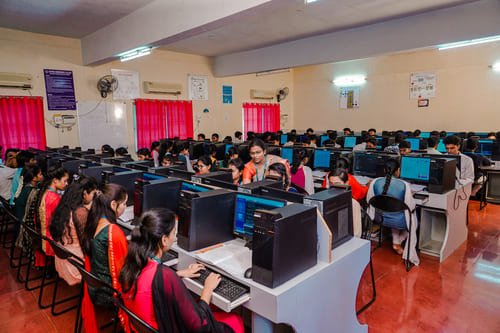
CSE
(Data Science)

Data Science Lab

Java Programming lab

Python Lab

Database Management Systems Lab