


Counselling Code 
EAPCET/ECET/ICET/POLYCET : KUPM
PGECET: KUPM1

Counselling Code 
EAPCET/ECET/ICET/POLYCET : KUPM
PGECET: KUPM1

ELECTRONICS & COMMUNICATION ENGINEERING

Achievements

Industry Collaboration

Research

Laboratory

  • About Department

  • About the Department

    Electronics & Communication Engineering Department was started in the year 2001 with the intake of 60 gradually it has been increased to 120 in the year 2002. Now it offers diploma program, undergraduate program, two postgraduate programs (M. Tech in VLSI Design & (M. Tech in Embedded Systems) and Ph.D. program with affiliation to JNTUA.

    The department has well experienced and dedicated faculty and staff of proven ability and diverse specialization. The faculty are actively involved in research in the areas of Digital Communications, Antennas, Signal processing and high frequency communications, Fiber optic Communications, Instrumentation, VLSI and Microprocessors, Micro-Electronics, Electronic Devices, Digital Electronics, Wireless Communication, Microwave Engineering, Neural Networks, Satellite Communication, Switching Systems, Computer Networks and Internet of Things etc. In the future, the department hopes to extend its research into newer areas. The department has well experienced and dedicated faculty and staff of proven ability and diverse specialization. The faculty are actively involved in research in the areas of Digital Communications, Antennas, Signal processing and high frequency communications, Fiber optic Communications, Instrumentation, VLSI and Microprocessors, Micro-Electronics, Electronic Devices, Digital Electronics, Wireless Communication, Microwave Engineering, Neural Networks, Satellite Communication, Switching Systems, Computer Networks and Internet of Things etc. In the future, the department hopes to extend its research into newer areas.

    The department is continually conducting professional activities such as Workshops, Conferences, Faculty Development Programs (FDPs), Project Expo’s and conducting the brain storming sessions on entrepreneurship for the students to become the technology based entrepreneurs.

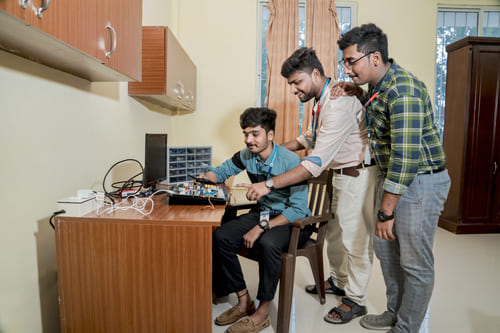
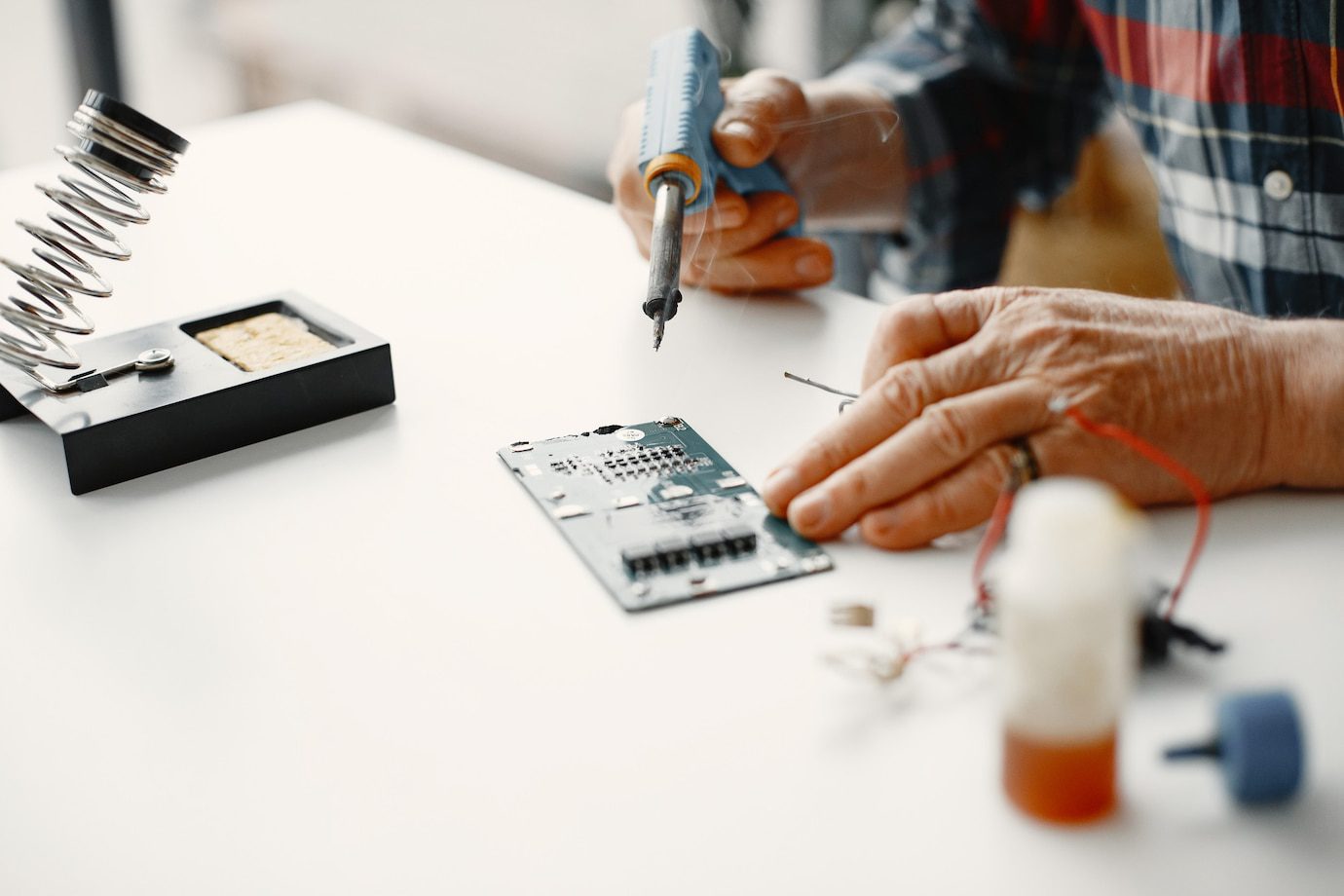
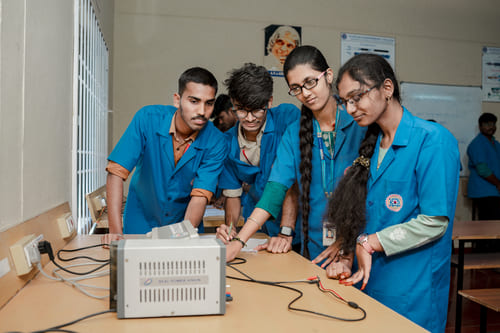
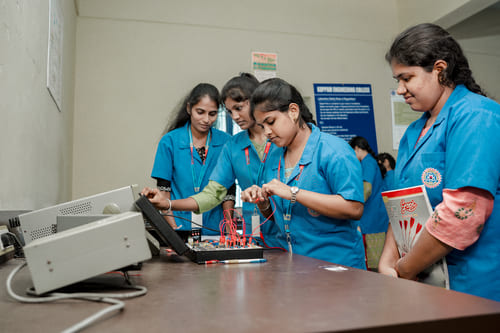
    The laboratories are well equipped with modern training facilities that cater to the requirements of the University syllabus as well as to architect the learning experience. This Department plays a vital role in training students of other branches of engineering too.

    The students are encouraged to deliver seminars, publish papers in both National / International Conferences in latest topics, thus promoting technical and communication skills. Over the years, our students have gone on to occupy key positions in education, science, industry and government administration.

    For analytical courses, problems are solved during the tutorial hours with better clarity. Innovative and modern teaching methodologies are adopted for classroom teaching.

    Besides regular classes and lab sessions, the Electronics and Communication Association conducts Guest Lectures on emerging technologies regularly thereby ensuring that the students are “Industry Ready”. Students are taken on Industrial visits on regular basis.

    Department has bagged the DST funded projects titled “NewGen IEDC” – Sanctioned Amount – Rs.2,87,00,000/- ; Started 2017 onwards and also received a grant of Rs 2,50,000 from UGC SERO, Rs. 1,00,000/- From IEI and received Rs:1,00,000/- from DST NIMAT.

    The students of this department have secured almost 90 percent placements in various high profile companies. Our alumni who have gone on to distinguished careers as innovators in industry, living and working throughout the world, still have corporate and personal ties to the College through recruitment, mentoring, guest lectures, and other interactions.

  • Vision & Mission

  • Vision and Mission

    VISION

    Strive for excellence in Electronics and Communication Engineering producing competent professionals with ethical values and social responsibility.

    MISSION

    • To accomplish excellence through experienced and dedicated faculty with scope for research and enable students to face global challenges with moral, ethical and social values.
    • To create an ambience for effective learning and skill development by promoting research culture through industry institute interaction.
    • To inculcate professionalism adhering to ethical and social values.
  • Programs Offered

  • Programs Offered

    Diploma in Electronics and Communication Engineering – (DECE)

    Department of Electronics and Communication Engineering has started the Diploma program in Electronics and Communication Engineering (DECE) in the year of 2011 on second shift basis with the sanctioned intake of 60. The program is approved by AICTE and affiliated to State Board of Technical Education and Training (SBTET). Electronics And Communication Engineering is a premier course in the technical education which deals with the Hardware and Software based design, Telecommunication standards, Digital and Analog Circuit design, maintenance and customer satisfaction techniques. Department of Electronics and Communication Engineering is offering technology oriented courses and creating manpower in the strategic areas well compatible with the industrial expectations.

    B.Tech. : Electronics and Communication Engineering

    Program Educational Objectives (PEOs)

    The graduates will

    Program Educational Objectives (PEOs)

    The Electronics and Communication Engineering program effort is to develop the following POs given by NBA:

    Program Specific Outcomes (PSOs):

    The department of Electronics and Communication Engineering has framed the following Program Specific Outcomes in consultation with concerned stakeholder and corresponding Committees.

    PG Programs :

    Program Educational Objectives (PEOs)

    The Department started the M. Tech. – Embedded Systems and VLSI Design in the year of 2012 and 2014 respectively. Currently, the Department following the syllabus framed by the JNTUA (R09 & R17). The program structure provides a right mix of compulsory and elective courses. The students of M. Tech. program are advised to carry out their project work by considering practical challenges/issues in the field of Embedded systems and VLSI Design.

    M.Tech Embedded Systems : PEOs, POs :

    Program Educational Objectives (PEOs)

    The graduates will be able to:

    Program Outcomes (POs)

    The Graduates will be able to:

    M.Tech VLSI Design : PEOs, POs :

    Program Educational Objective (PEOs)

    The Graduates will be able to:

    Program Outcomes (POs)

    The Graduates will be able to:
  • Syllabus

  • Laboratory Details

  • Laboratory Details

    Electronics and Communication Engineering

    Electronics Circuits Analysis & Design Lab.

    Pulse & Digital Circuits Lab.

    Linear and Digital IC applications Lab.

    Analog and Digital Communications Lab.

    Microprocessors and DSP Lab.

    Microwave and Optical Communications Lab.

    M.Tech (Embedded Systems)

    Microcontrollers and Interfacing Lab.

    RTOS & FPGA Lab.

    M.Tech (VLSI)

    Digital IC Design Lab.

    Mixed Signal lab.

  • Faculty Details

  • Faculty Details

    staff profile image
    staff profile image
    staff profile image
    staff profile image
    staff profile image
    staff profile image
    staff profile image
    staff profile image
    staff profile image
    staff profile image
    staff profile image
    staff profile image
    staff profile image
    staff profile image
    staff profile image
    staff profile image
    staff profile image
    staff profile image
    staff profile image
    staff profile image
    staff profile image
    staff profile image
    staff profile image
    staff profile image
  • Office

About the Department

Electronics & Communication Engineering Department was started in the year 2001 with the intake of 60 gradually it has been increased to 120 in the year 2002. Now it offers diploma program, undergraduate program, two postgraduate programs (M. Tech in VLSI Design & (M. Tech in Embedded Systems) and Ph.D. program with affiliation to JNTUA.

The department has well experienced and dedicated faculty and staff of proven ability and diverse specialization. The faculty are actively involved in research in the areas of Digital Communications, Antennas, Signal processing and high frequency communications, Fiber optic Communications, Instrumentation, VLSI and Microprocessors, Micro-Electronics, Electronic Devices, Digital Electronics, Wireless Communication, Microwave Engineering, Neural Networks, Satellite Communication, Switching Systems, Computer Networks and Internet of Things etc. In the future, the department hopes to extend its research into newer areas. The department has well experienced and dedicated faculty and staff of proven ability and diverse specialization. The faculty are actively involved in research in the areas of Digital Communications, Antennas, Signal processing and high frequency communications, Fiber optic Communications, Instrumentation, VLSI and Microprocessors, Micro-Electronics, Electronic Devices, Digital Electronics, Wireless Communication, Microwave Engineering, Neural Networks, Satellite Communication, Switching Systems, Computer Networks and Internet of Things etc. In the future, the department hopes to extend its research into newer areas.

The department is continually conducting professional activities such as Workshops, Conferences, Faculty Development Programs (FDPs), Project Expo’s and conducting the brain storming sessions on entrepreneurship for the students to become the technology based entrepreneurs.

The laboratories are well equipped with modern training facilities that cater to the requirements of the University syllabus as well as to architect the learning experience. This Department plays a vital role in training students of other branches of engineering too.

The students are encouraged to deliver seminars, publish papers in both National / International Conferences in latest topics, thus promoting technical and communication skills. Over the years, our students have gone on to occupy key positions in education, science, industry and government administration.

For analytical courses, problems are solved during the tutorial hours with better clarity. Innovative and modern teaching methodologies are adopted for classroom teaching.

Besides regular classes and lab sessions, the Electronics and Communication Association conducts Guest Lectures on emerging technologies regularly thereby ensuring that the students are “Industry Ready”. Students are taken on Industrial visits on regular basis.

Department has bagged the DST funded projects titled “NewGen IEDC” – Sanctioned Amount – Rs.2,87,00,000/- ; Started 2017 onwards and also received a grant of Rs 2,50,000 from UGC SERO, Rs. 1,00,000/- From IEI and received Rs:1,00,000/- from DST NIMAT.

The students of this department have secured almost 90 percent placements in various high profile companies. Our alumni who have gone on to distinguished careers as innovators in industry, living and working throughout the world, still have corporate and personal ties to the College through recruitment, mentoring, guest lectures, and other interactions.

Vision and Mission

VISION

Strive for excellence in Electronics and Communication Engineering producing competent professionals with ethical values and social responsibility.

MISSION

  • To accomplish excellence through experienced and dedicated faculty with scope for research and enable students to face global challenges with moral, ethical and social values.
  • To create an ambience for effective learning and skill development by promoting research culture through industry institute interaction.
  • To inculcate professionalism adhering to ethical and social values.

Programs Offered

Diploma in Electronics and Communication Engineering – (DECE)

Department of Electronics and Communication Engineering has started the Diploma program in Electronics and Communication Engineering (DECE) in the year of 2011 on second shift basis with the sanctioned intake of 60. The program is approved by AICTE and affiliated to State Board of Technical Education and Training (SBTET). Electronics And Communication Engineering is a premier course in the technical education which deals with the Hardware and Software based design, Telecommunication standards, Digital and Analog Circuit design, maintenance and customer satisfaction techniques. Department of Electronics and Communication Engineering is offering technology oriented courses and creating manpower in the strategic areas well compatible with the industrial expectations.

B.Tech. : Electronics and Communication Engineering

Program Educational Objectives (PEOs)

The graduates will

Program Educational Objectives (PEOs)

The Electronics and Communication Engineering program effort is to develop the following POs given by NBA:

Program Specific Outcomes (PSOs):

The department of Electronics and Communication Engineering has framed the following Program Specific Outcomes in consultation with concerned stakeholder and corresponding Committees.

PG Programs :

Program Educational Objectives (PEOs)

The Department started the M. Tech. – Embedded Systems and VLSI Design in the year of 2012 and 2014 respectively. Currently, the Department following the syllabus framed by the JNTUA (R09 & R17). The program structure provides a right mix of compulsory and elective courses. The students of M. Tech. program are advised to carry out their project work by considering practical challenges/issues in the field of Embedded systems and VLSI Design.

M.Tech Embedded Systems : PEOs, POs :

Program Educational Objectives (PEOs)

The graduates will be able to:

Program Outcomes (POs)

The Graduates will be able to:

M.Tech VLSI Design : PEOs, POs :

Program Educational Objective (PEOs)

The Graduates will be able to:

Program Outcomes (POs)

The Graduates will be able to:

Laboratory Details

Electronics and Communication Engineering

Electronics Circuits Analysis & Design Lab.

Pulse & Digital Circuits Lab.

Linear and Digital IC applications Lab.

Analog and Digital Communications Lab.

Microprocessors and DSP Lab.

Microwave and Optical Communications Lab.

M.Tech (Embedded Systems)

Microcontrollers and Interfacing Lab.

RTOS & FPGA Lab.

M.Tech (VLSI)

Digital IC Design Lab.

Mixed Signal lab.

Faculty Details

staff profile image
staff profile image
staff profile image
staff profile image
staff profile image
staff profile image
staff profile image
staff profile image
staff profile image
staff profile image
staff profile image
staff profile image
staff profile image
staff profile image
staff profile image
staff profile image
staff profile image
staff profile image
staff profile image
staff profile image
staff profile image
staff profile image
staff profile image
staff profile image
  • About Department
  • About the Department

    Electronics & Communication Engineering Department was started in the year 2001 with the intake of 60 gradually it has been increased to 120 in the year 2002. Now it offers diploma program, undergraduate program, two postgraduate programs (M. Tech in VLSI Design & (M. Tech in Embedded Systems) and Ph.D. program with affiliation to JNTUA.

    The department has well experienced and dedicated faculty and staff of proven ability and diverse specialization. The faculty are actively involved in research in the areas of Digital Communications, Antennas, Signal processing and high frequency communications, Fiber optic Communications, Instrumentation, VLSI and Microprocessors, Micro-Electronics, Electronic Devices, Digital Electronics, Wireless Communication, Microwave Engineering, Neural Networks, Satellite Communication, Switching Systems, Computer Networks and Internet of Things etc. In the future, the department hopes to extend its research into newer areas. The department has well experienced and dedicated faculty and staff of proven ability and diverse specialization. The faculty are actively involved in research in the areas of Digital Communications, Antennas, Signal processing and high frequency communications, Fiber optic Communications, Instrumentation, VLSI and Microprocessors, Micro-Electronics, Electronic Devices, Digital Electronics, Wireless Communication, Microwave Engineering, Neural Networks, Satellite Communication, Switching Systems, Computer Networks and Internet of Things etc. In the future, the department hopes to extend its research into newer areas.

    The department is continually conducting professional activities such as Workshops, Conferences, Faculty Development Programs (FDPs), Project Expo’s and conducting the brain storming sessions on entrepreneurship for the students to become the technology based entrepreneurs.

    The laboratories are well equipped with modern training facilities that cater to the requirements of the University syllabus as well as to architect the learning experience. This Department plays a vital role in training students of other branches of engineering too.

    The students are encouraged to deliver seminars, publish papers in both National / International Conferences in latest topics, thus promoting technical and communication skills. Over the years, our students have gone on to occupy key positions in education, science, industry and government administration.

    For analytical courses, problems are solved during the tutorial hours with better clarity. Innovative and modern teaching methodologies are adopted for classroom teaching.

    Besides regular classes and lab sessions, the Electronics and Communication Association conducts Guest Lectures on emerging technologies regularly thereby ensuring that the students are “Industry Ready”. Students are taken on Industrial visits on regular basis.

    Department has bagged the DST funded projects titled “NewGen IEDC” – Sanctioned Amount – Rs.2,87,00,000/- ; Started 2017 onwards and also received a grant of Rs 2,50,000 from UGC SERO, Rs. 1,00,000/- From IEI and received Rs:1,00,000/- from DST NIMAT.

    The students of this department have secured almost 90 percent placements in various high profile companies. Our alumni who have gone on to distinguished careers as innovators in industry, living and working throughout the world, still have corporate and personal ties to the College through recruitment, mentoring, guest lectures, and other interactions.

  • Vision & Mission
  • Vision and Mission

    VISION

    Strive for excellence in Electronics and Communication Engineering producing competent professionals with ethical values and social responsibility.

    MISSION

    To accomplish excellence through experienced and dedicated faculty with scope for research and enable students to face global challenges with moral, ethical and social values.
    To create an ambience for effective learning and skill development by promoting research culture through industry institute interaction.
    To inculcate professionalism adhering to ethical and social values

    .

  • Programs Offered
  • Programs Offered

    Diploma in Electronics and Communication Engineering – (DECE)

    Department of Electronics and Communication Engineering has started the Diploma program in Electronics and Communication Engineering (DECE) in the year of 2011 on second shift basis with the sanctioned intake of 60. The program is approved by AICTE and affiliated to State Board of Technical Education and Training (SBTET). Electronics And Communication Engineering is a premier course in the technical education which deals with the Hardware and Software based design, Telecommunication standards, Digital and Analog Circuit design, maintenance and customer satisfaction techniques. Department of Electronics and Communication Engineering is offering technology oriented courses and creating manpower in the strategic areas well compatible with the industrial expectations.

    B.Tech. : Electronics and Communication Engineering

    Program Educational Objectives (PEOs)

    The graduates will

    Program Educational Objectives (PEOs)

    The Electronics and Communication Engineering program effort is to develop the following POs given by NBA:

    Program Specific Outcomes (PSOs):

    The department of Electronics and Communication Engineering has framed the following Program Specific Outcomes in consultation with concerned stakeholder and corresponding Committees.

    PG Programs :

    Program Educational Objectives (PEOs)

    The Department started the M. Tech. – Embedded Systems and VLSI Design in the year of 2012 and 2014 respectively. Currently, the Department following the syllabus framed by the JNTUA (R09 & R17). The program structure provides a right mix of compulsory and elective courses. The students of M. Tech. program are advised to carry out their project work by considering practical challenges/issues in the field of Embedded systems and VLSI Design.

    M.Tech Embedded Systems : PEOs, POs :

    Program Educational Objectives (PEOs)

    The graduates will be able to:

    Program Outcomes (POs)

    The Graduates will be able to:

    M.Tech VLSI Design : PEOs, POs :

    Program Educational Objective (PEOs)

    The Graduates will be able to:

    Program Outcomes (POs)

    The Graduates will be able to:
  • Syllabus
  • Laboratory Details
  • Laboratory Details

    Electronics and Communication Engineering

    Electronics Circuits Analysis & Design Lab.

    Pulse & Digital Circuits Lab.

    Linear and Digital IC applications Lab.

    Analog and Digital Communications Lab.

    Microprocessors and DSP Lab.

    Microwave and Optical Communications Lab.

    M.Tech (Embedded Systems)

    Microcontrollers and Interfacing Lab.

    RTOS & FPGA Lab.

    M.Tech (VLSI)

    Digital IC Design Lab.

    Mixed Signal lab.

  • Faculty Details
  • Faculty Details

    staff profile image
    staff profile image
    staff profile image
    staff profile image
    staff profile image
    staff profile image
    staff profile image
    staff profile image
    staff profile image
    staff profile image
    staff profile image
    staff profile image
    staff profile image
    staff profile image
    staff profile image
    staff profile image
    staff profile image
    staff profile image
    staff profile image
    staff profile image
    staff profile image
    staff profile image
    staff profile image
    staff profile image
  • News-Letter
  • Office

About the Department

Electronics & Communication Engineering Department was started in the year 2001 with the intake of 60 gradually it has been increased to 120 in the year 2002. Now it offers diploma program, undergraduate program, two postgraduate programs (M. Tech in VLSI Design & (M. Tech in Embedded Systems) and Ph.D. program with affiliation to JNTUA.

The department has well experienced and dedicated faculty and staff of proven ability and diverse specialization. The faculty are actively involved in research in the areas of Digital Communications, Antennas, Signal processing and high frequency communications, Fiber optic Communications, Instrumentation, VLSI and Microprocessors, Micro-Electronics, Electronic Devices, Digital Electronics, Wireless Communication, Microwave Engineering, Neural Networks, Satellite Communication, Switching Systems, Computer Networks and Internet of Things etc. In the future, the department hopes to extend its research into newer areas. The department has well experienced and dedicated faculty and staff of proven ability and diverse specialization. The faculty are actively involved in research in the areas of Digital Communications, Antennas, Signal processing and high frequency communications, Fiber optic Communications, Instrumentation, VLSI and Microprocessors, Micro-Electronics, Electronic Devices, Digital Electronics, Wireless Communication, Microwave Engineering, Neural Networks, Satellite Communication, Switching Systems, Computer Networks and Internet of Things etc. In the future, the department hopes to extend its research into newer areas.

The department is continually conducting professional activities such as Workshops, Conferences, Faculty Development Programs (FDPs), Project Expo’s and conducting the brain storming sessions on entrepreneurship for the students to become the technology based entrepreneurs.

The laboratories are well equipped with modern training facilities that cater to the requirements of the University syllabus as well as to architect the learning experience. This Department plays a vital role in training students of other branches of engineering too.

The students are encouraged to deliver seminars, publish papers in both National / International Conferences in latest topics, thus promoting technical and communication skills. Over the years, our students have gone on to occupy key positions in education, science, industry and government administration.

For analytical courses, problems are solved during the tutorial hours with better clarity. Innovative and modern teaching methodologies are adopted for classroom teaching.

Besides regular classes and lab sessions, the Electronics and Communication Association conducts Guest Lectures on emerging technologies regularly thereby ensuring that the students are “Industry Ready”. Students are taken on Industrial visits on regular basis.

Department has bagged the DST funded projects titled “NewGen IEDC” – Sanctioned Amount – Rs.2,87,00,000/- ; Started 2017 onwards and also received a grant of Rs 2,50,000 from UGC SERO, Rs. 1,00,000/- From IEI and received Rs:1,00,000/- from DST NIMAT.

The students of this department have secured almost 90 percent placements in various high profile companies. Our alumni who have gone on to distinguished careers as innovators in industry, living and working throughout the world, still have corporate and personal ties to the College through recruitment, mentoring, guest lectures, and other interactions.

Vision and Mission

VISION

Strive for excellence in Electronics and Communication Engineering producing competent professionals with ethical values and social responsibility.

MISSION

To accomplish excellence through experienced and dedicated faculty with scope for research and enable students to face global challenges with moral, ethical and social values.
To create an ambience for effective learning and skill development by promoting research culture through industry institute interaction.
To inculcate professionalism adhering to ethical and social values

.

Programs Offered

Diploma in Electronics and Communication Engineering – (DECE)

Department of Electronics and Communication Engineering has started the Diploma program in Electronics and Communication Engineering (DECE) in the year of 2011 on second shift basis with the sanctioned intake of 60. The program is approved by AICTE and affiliated to State Board of Technical Education and Training (SBTET). Electronics And Communication Engineering is a premier course in the technical education which deals with the Hardware and Software based design, Telecommunication standards, Digital and Analog Circuit design, maintenance and customer satisfaction techniques. Department of Electronics and Communication Engineering is offering technology oriented courses and creating manpower in the strategic areas well compatible with the industrial expectations.

B.Tech. : Electronics and Communication Engineering

Program Educational Objectives (PEOs)

The graduates will

Program Educational Objectives (PEOs)

The Electronics and Communication Engineering program effort is to develop the following POs given by NBA:

Program Specific Outcomes (PSOs):

The department of Electronics and Communication Engineering has framed the following Program Specific Outcomes in consultation with concerned stakeholder and corresponding Committees.

PG Programs :

Program Educational Objectives (PEOs)

The Department started the M. Tech. – Embedded Systems and VLSI Design in the year of 2012 and 2014 respectively. Currently, the Department following the syllabus framed by the JNTUA (R09 & R17). The program structure provides a right mix of compulsory and elective courses. The students of M. Tech. program are advised to carry out their project work by considering practical challenges/issues in the field of Embedded systems and VLSI Design.

M.Tech Embedded Systems : PEOs, POs :

Program Educational Objectives (PEOs)

The graduates will be able to:

Program Outcomes (POs)

The Graduates will be able to:

M.Tech VLSI Design : PEOs, POs :

Program Educational Objective (PEOs)

The Graduates will be able to:

Program Outcomes (POs)

The Graduates will be able to:

Laboratory Details

Electronics and Communication Engineering

Electronics Circuits Analysis & Design Lab.

Pulse & Digital Circuits Lab.

Linear and Digital IC applications Lab.

Analog and Digital Communications Lab.

Microprocessors and DSP Lab.

Microwave and Optical Communications Lab.

M.Tech (Embedded Systems)

Microcontrollers and Interfacing Lab.

RTOS & FPGA Lab.

M.Tech (VLSI)

Digital IC Design Lab.

Mixed Signal lab.

Faculty Details

staff profile image
staff profile image
staff profile image
staff profile image
staff profile image
staff profile image
staff profile image
staff profile image
staff profile image
staff profile image
staff profile image
staff profile image
staff profile image
staff profile image
staff profile image
staff profile image
staff profile image
staff profile image
staff profile image
staff profile image
staff profile image
staff profile image
staff profile image
staff profile image